


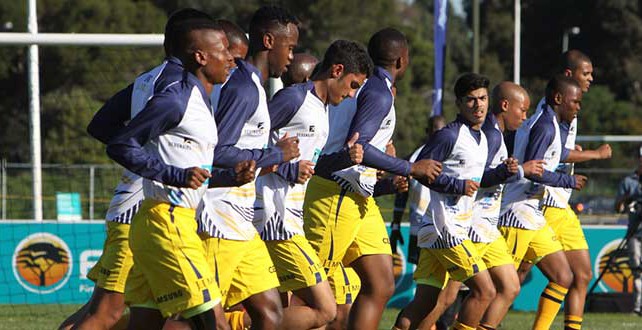
Despite putting up a strong fight, it was a matter of so-close-yet-so-far for UWC as they narrowly missed out on a semifinal spot in this year’s Varsity Football tournament.
The UWC team needed a win in their last round robin game away at UCT on Monday but their neighbours had none of it as the thrilling encounter ended in a 3-3 draw.
That meant that UWC end the campaign sixth on the log standings, the same position they ended on last year.
But coach Aboobaker “Boebie” Williams’ team have bowed out of the competitions with their heads up.
They beat defending champions UP-Tuks and last year’s finalists, the NMMU Madibaz; drew three games against log leaders from the UJ and Limpopo in addition to UCT; and narrowly lost two matches against NWU and Kovsies by an odd goal.
After a slow start, the UWC side ended the tournament on the high, dishing out entertaining football and producing flashes of individual brilliance.
The team was awarded five FNB Man of the Match accolades in seven games – two each for goalkeeper Reon October and attacking midfielder Thulani Mkosi, and another for inspirational midfielder Tapelo Sixishe.
In addition, the team earned four Samsung Super Striker awards – two for midfielder Wade Crowie and one each for strikers Curtley Beukes and Reza Zain Dramat.
Although disappointed about falling short of the semis, UWC assistant coach Salie Adams praised the team for their efforts in the tournament.
“It was unfortunate that we didn’t go through, but compliments must go to the players,” Adams says. “The guys gave their all and the spirit in the team was high.”
According to Adams, UWC started slow in the competition as the team embarked on a trial and error method with the new players, trying to find the right combinations and getting the players to understand the philosophy of the technical staff.
“We had to ensure that the guys thought harder about the game and understand our philosophy. It worked after a few games, and in the end they competed well.”
The biggest challenge, though, was the fitness levels of the players, which Adams estimated it at 65% on average.
“That is quite low compared to the standards a tournament of Varsity Football nature demands.”
The fact that most players belong to different clubs in different leagues also posed a challenge Adams added, as they brought different football philosophies with them.
He suggested that there is a need for the University to have its own semi-professional franchise so players can continue playing together, as is the case in certain other universities.
Nevertheless, Adams believes that the foundation has been laid and a lot of players are now confident with their abilities. That’s good news for UWC, as many of the players are young and in their first and second years of study, meaning they may still be around next year and eligible to play Varsity Football.
But the door will remain open for newcomers, whom Adams believes are in abundance at the University.
Adams concluded that Varsity Football was a good showpiece which gave players the opportunity to showcase their skills and abilities, and the competition raised the ante to high levels this season.
“The standards in this tournament are much higher than the SAFA Second Division League and very close to the National First Division,” he commented. “The fact that we have five Man of the Match awards in seven games at this level means individually we performed well, collectively we could have done better, and the future looks bright for UWC.”
UWC have now turned their focus to the local league and USSA league, where they are in a commanding position, and aim to do well at the club championships at the end of the year to qualify for the next Varsity Football season.
By Myolisi Gophe


